Research greenhouse – design, irrigation control and operation
We run a research greenhouse: from designing and building the facility, through supervising the automatic irrigation system, to day-to-day operation and plant growth trials. The Institute of Fluid-Flow Machinery of the Polish Academy of Sciences uses it in EU-funded projects.
Why an engineering company needs a greenhouse
Because without one the job is not finished. We develop technologies for producing fertilisers from waste: biochar, digestate, sewage sludge and ash. You can build the best pelletising and drying line, but the final test is whether plants grow on the product.
Pellet moisture, strength or nitrogen content describe the product only. Only a growth trial shows whether the fertiliser works, how it behaves in the soil and whether it does harm. That is why we have our own greenhouse facility.
What we do
Greenhouse design and construction
A research greenhouse is different from a horticultural one. It must provide repeatable conditions, allow many experimental variants to run in parallel and be operable without disturbing the experimental layout.
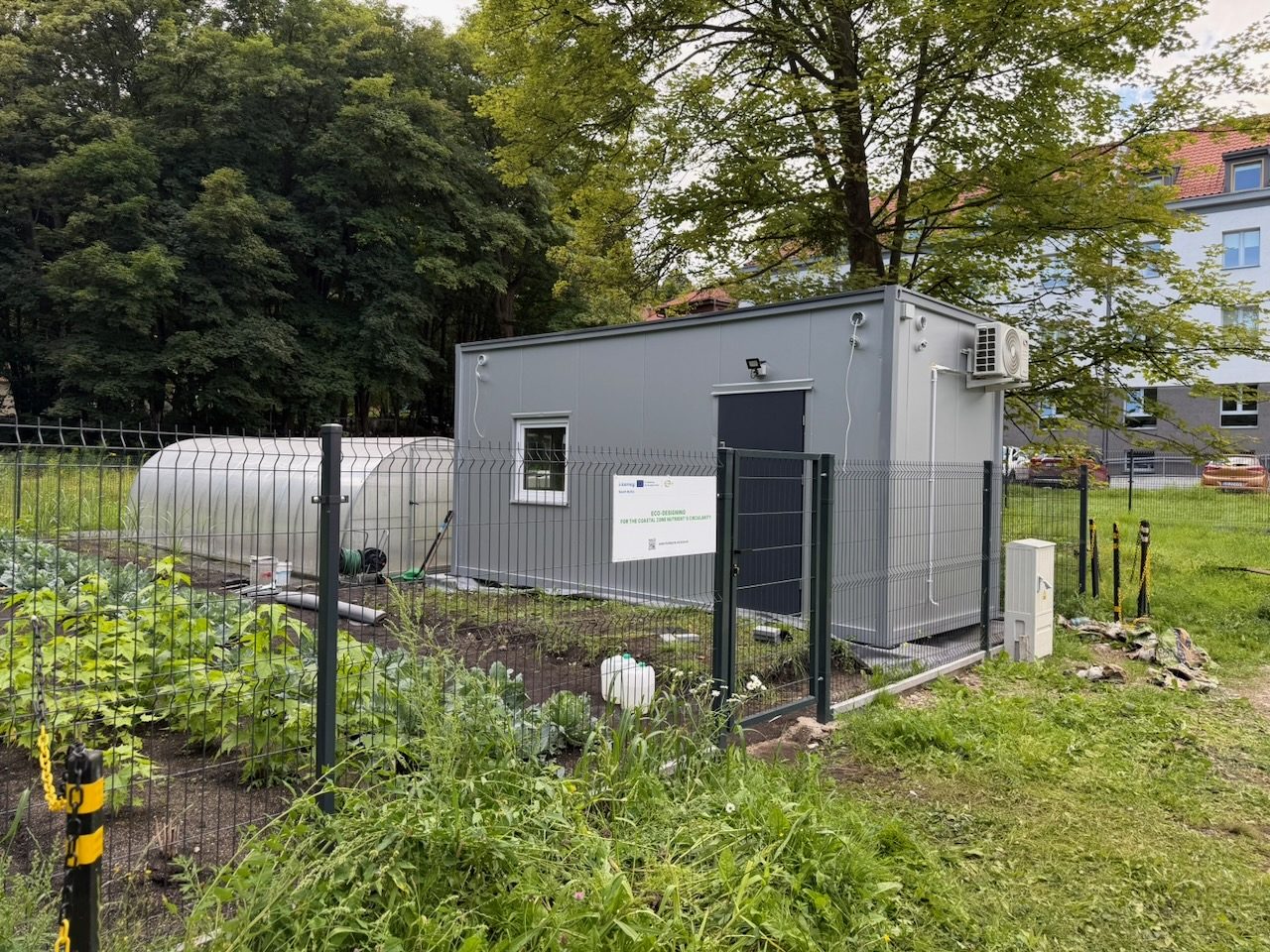
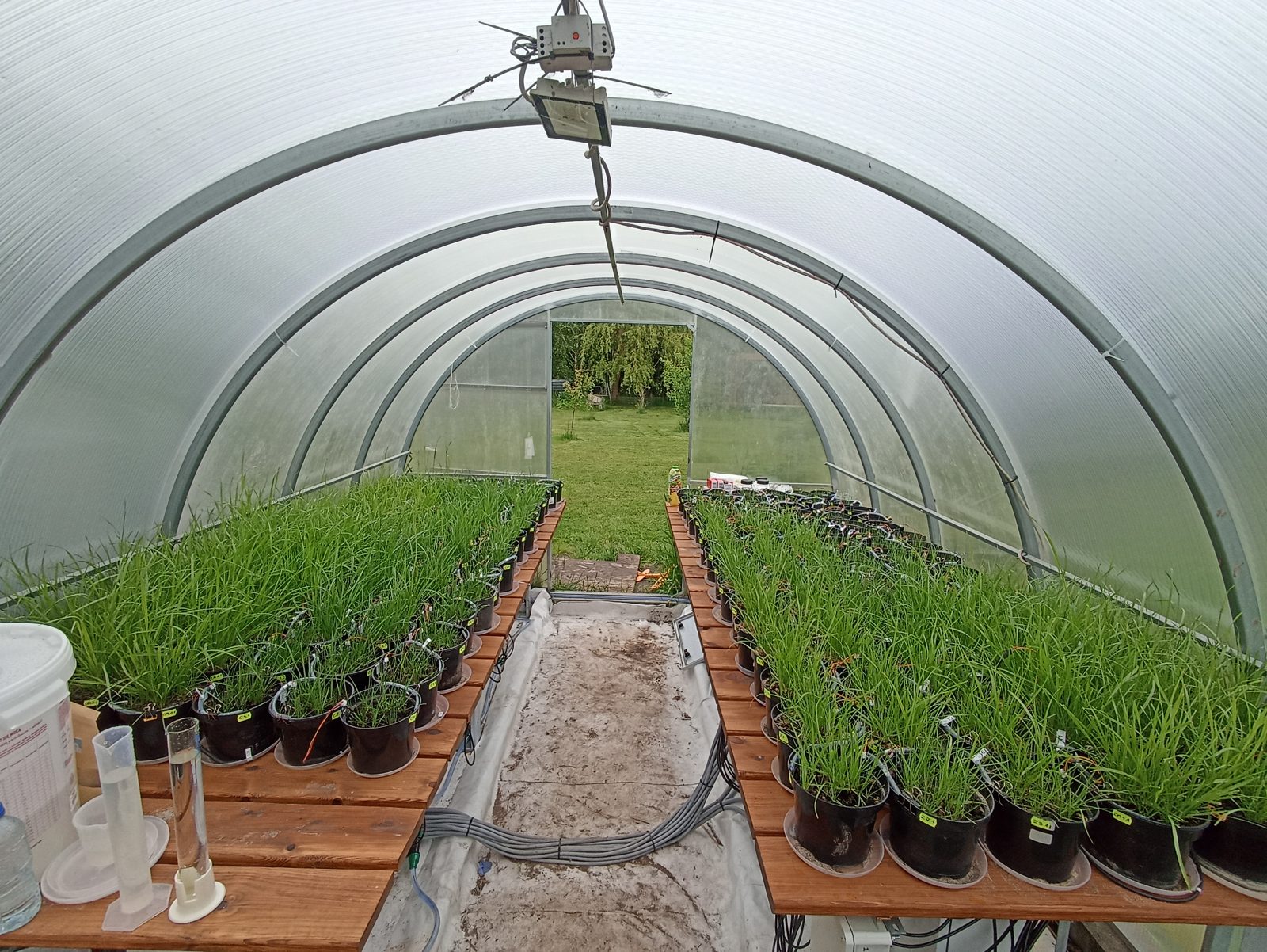
In the ECONUT project for Gdańsk University of Technology we designed and built a year-round 20–25 m² greenhouse with automatically opening windows, temperature and humidity monitoring, LED grow lights and automatic drip irrigation, together with the required notifications and approvals. ECONUT project description
Fit-out
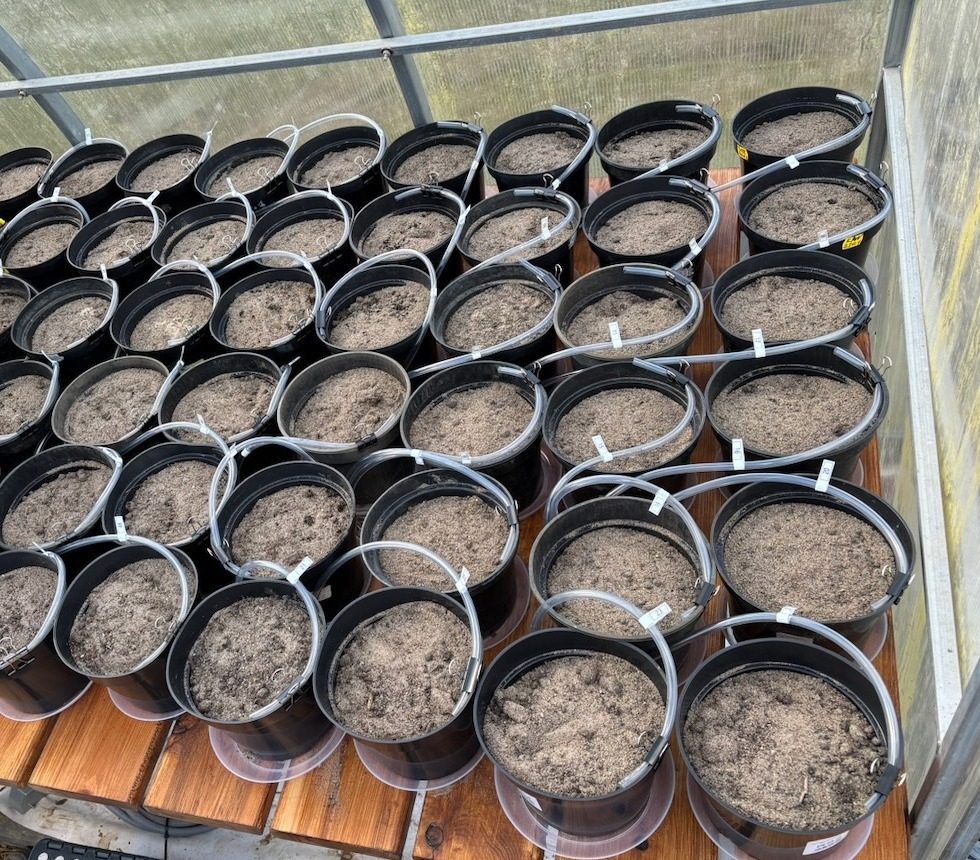
Growing tables, pot layout and preparation of stations for each experimental variant.
Automatic irrigation
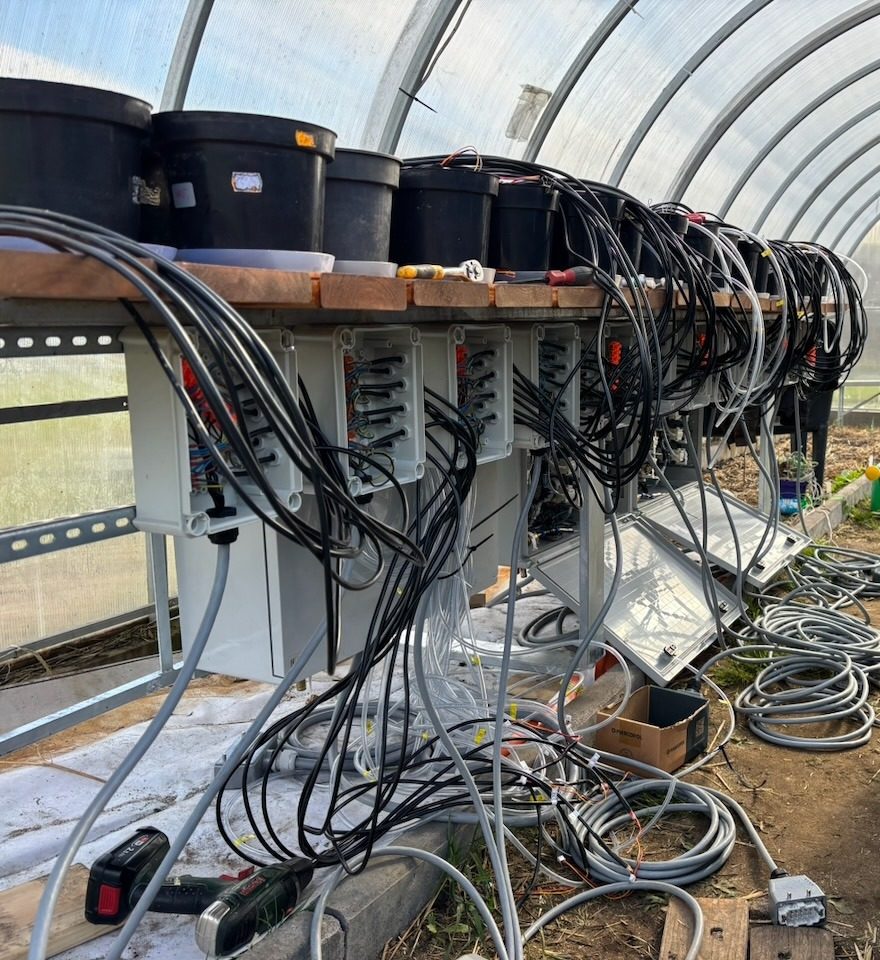
We supervise the construction and commissioning of prototype automatic pot irrigation systems:
- we define system requirements with the site owner and the research team,
- we select the contractor and supervise the work,
- we connect the system electrically and commission the controls,
- we write operating rules and train the people who run the system.
In an agronomic experiment irrigation is a variable, not background. If one pot gets more water than another, the whole series goes in the bin.
Measurements
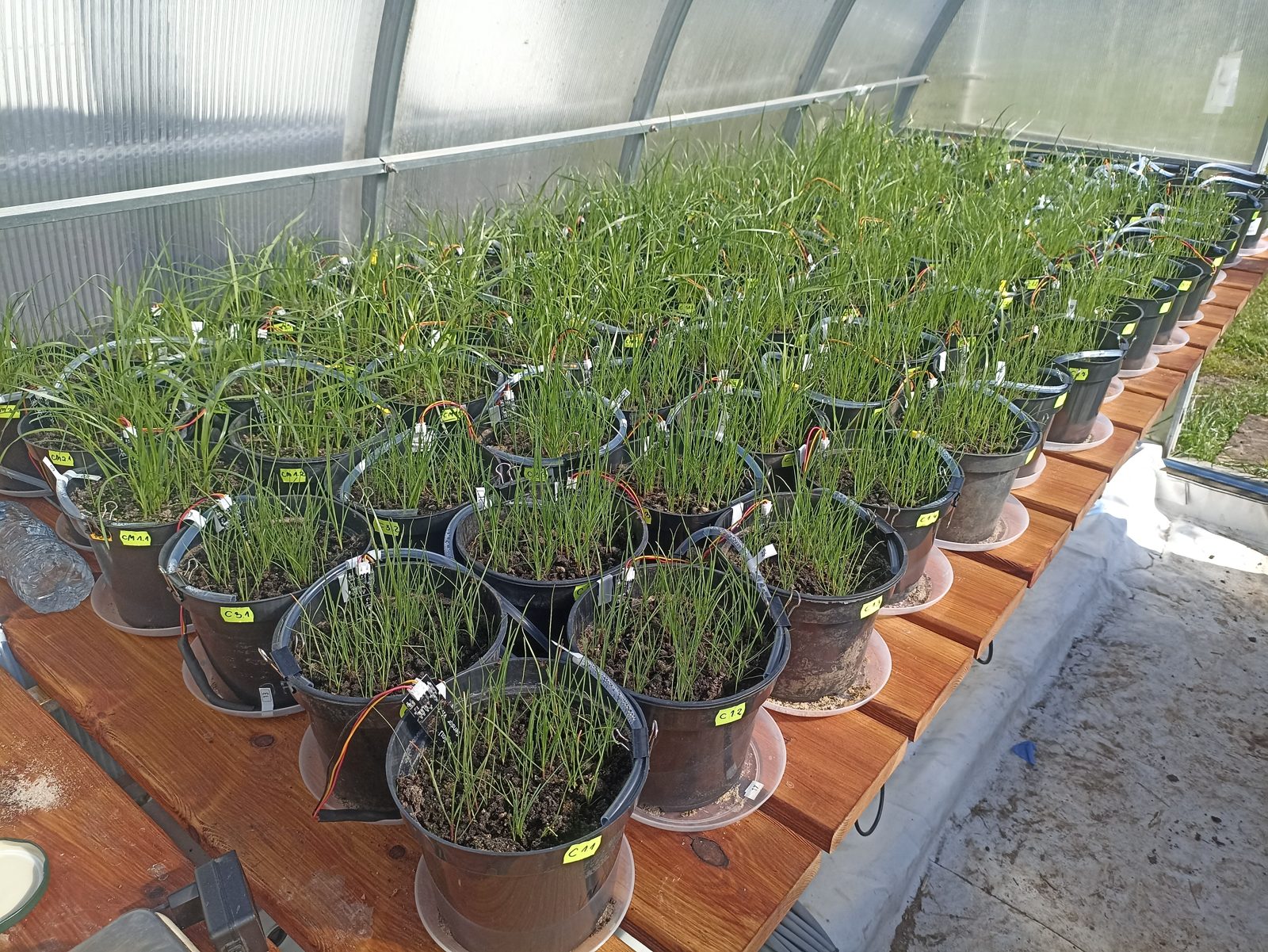
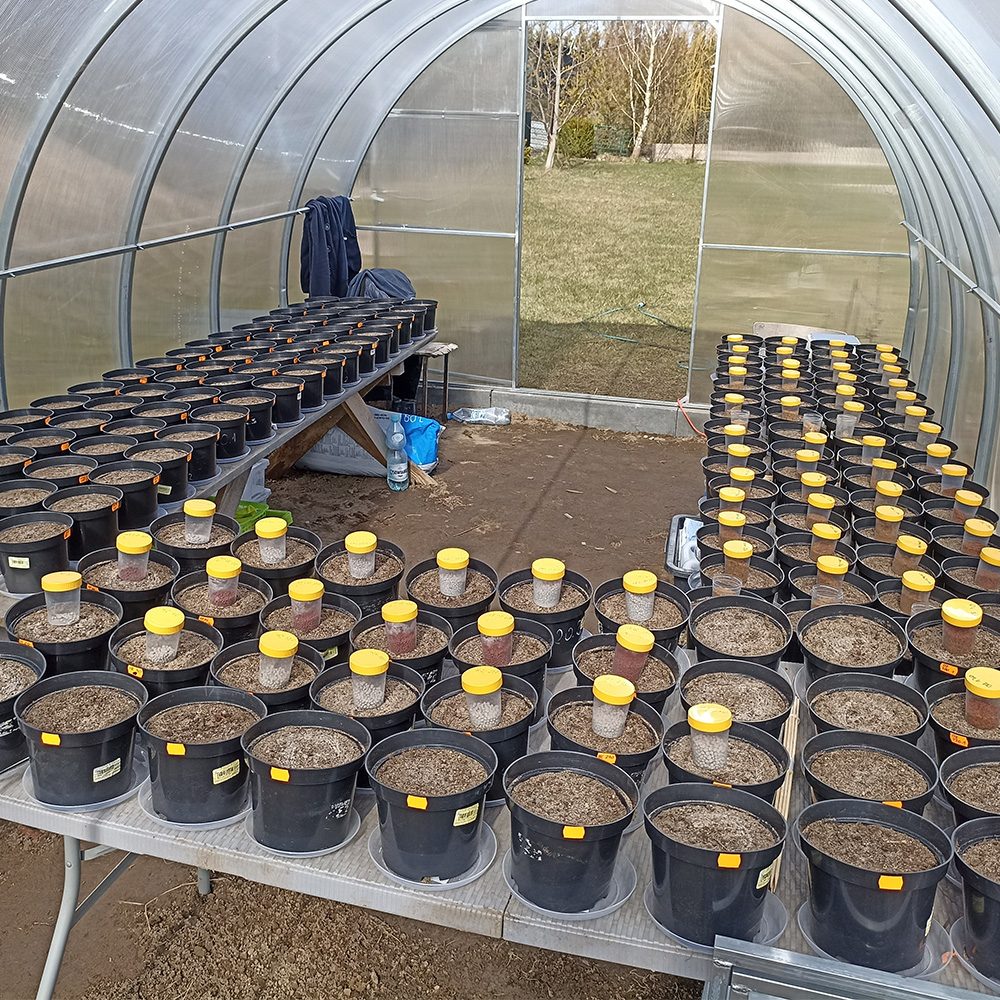
A pot experiment runs for the whole season, from sowing in spring to the last harvest in autumn, and it is measured and documented throughout:
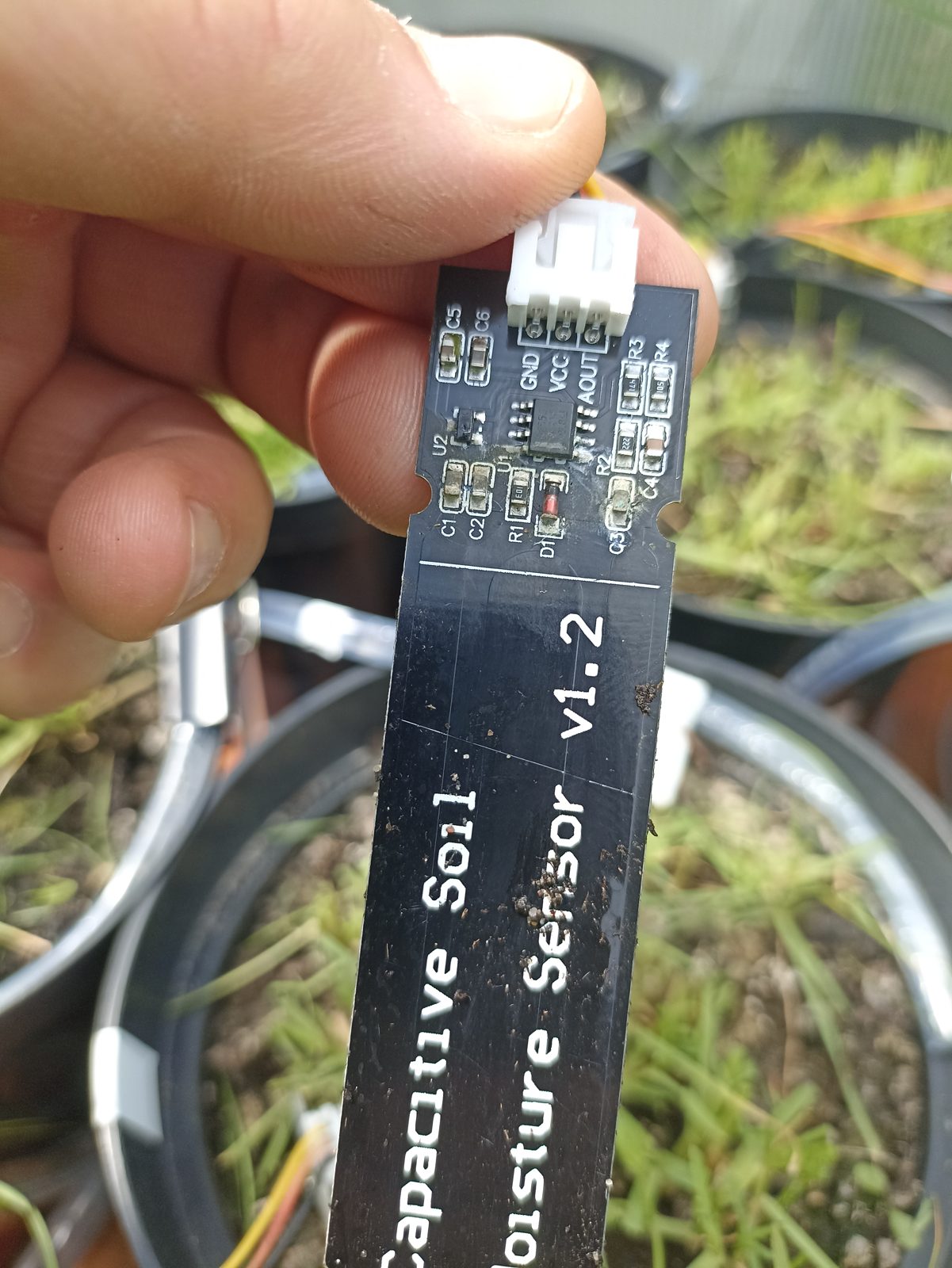
- substrate moisture in the pots is measured by capacitive sensors connected to the control system,
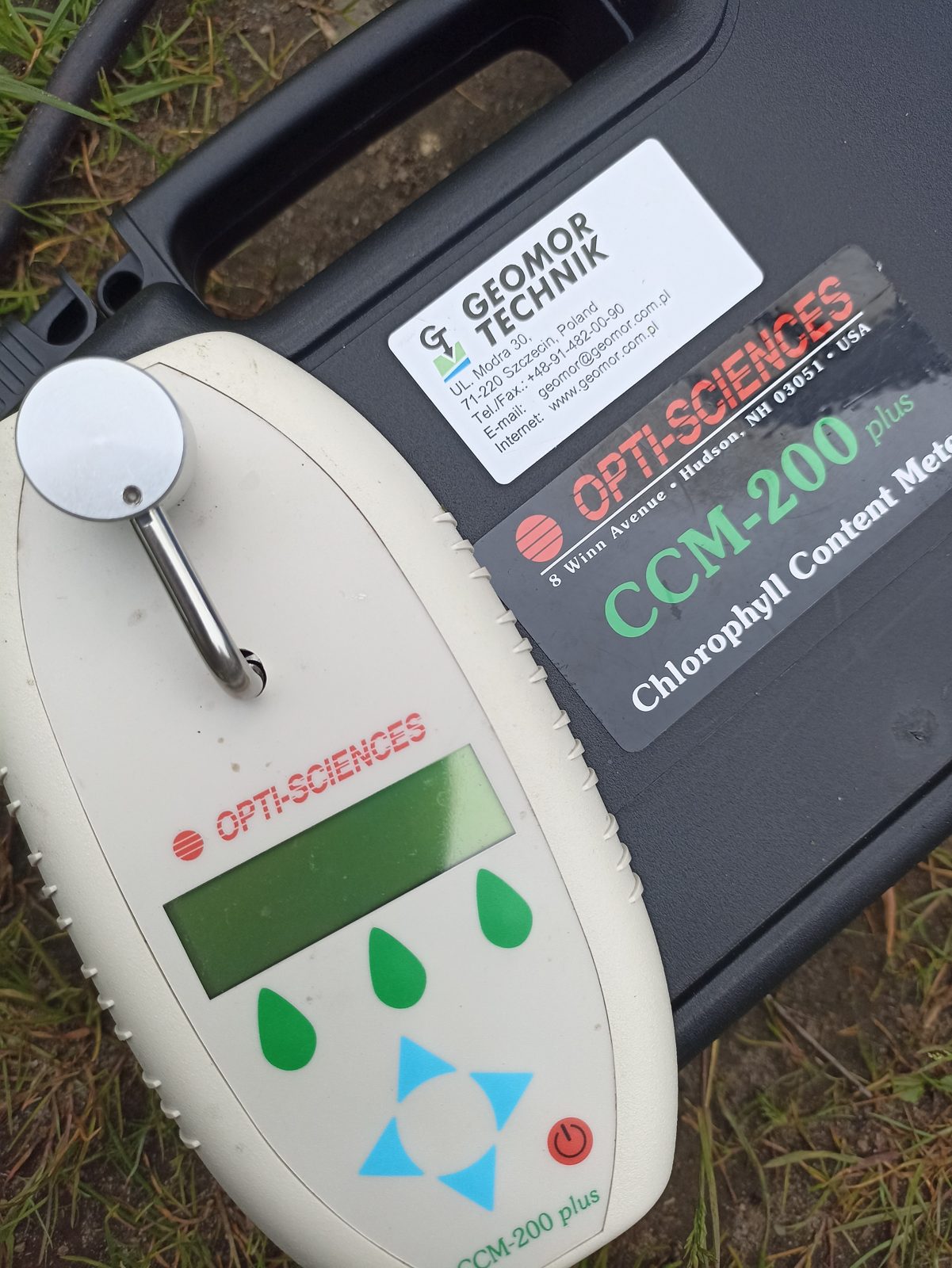
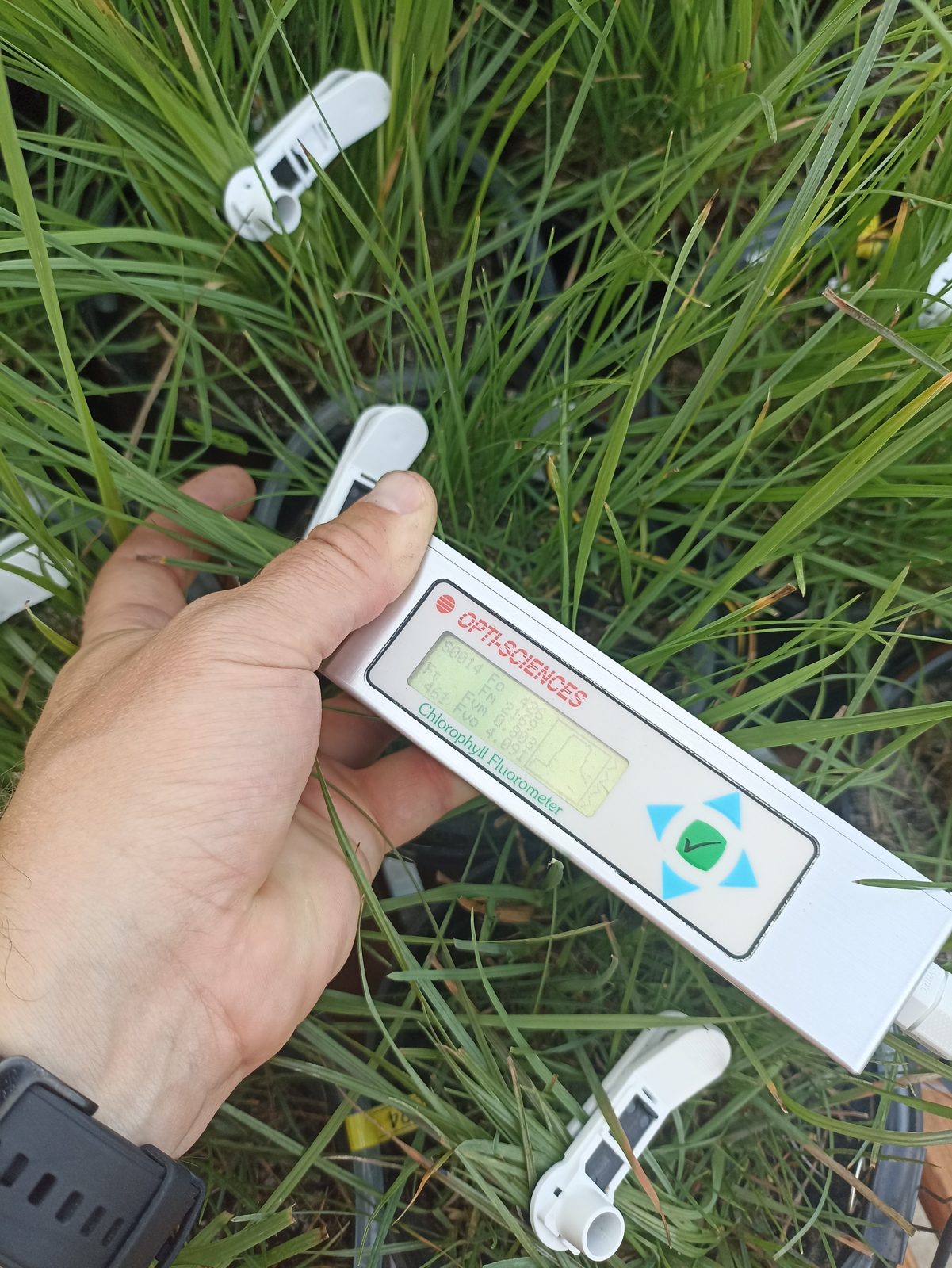
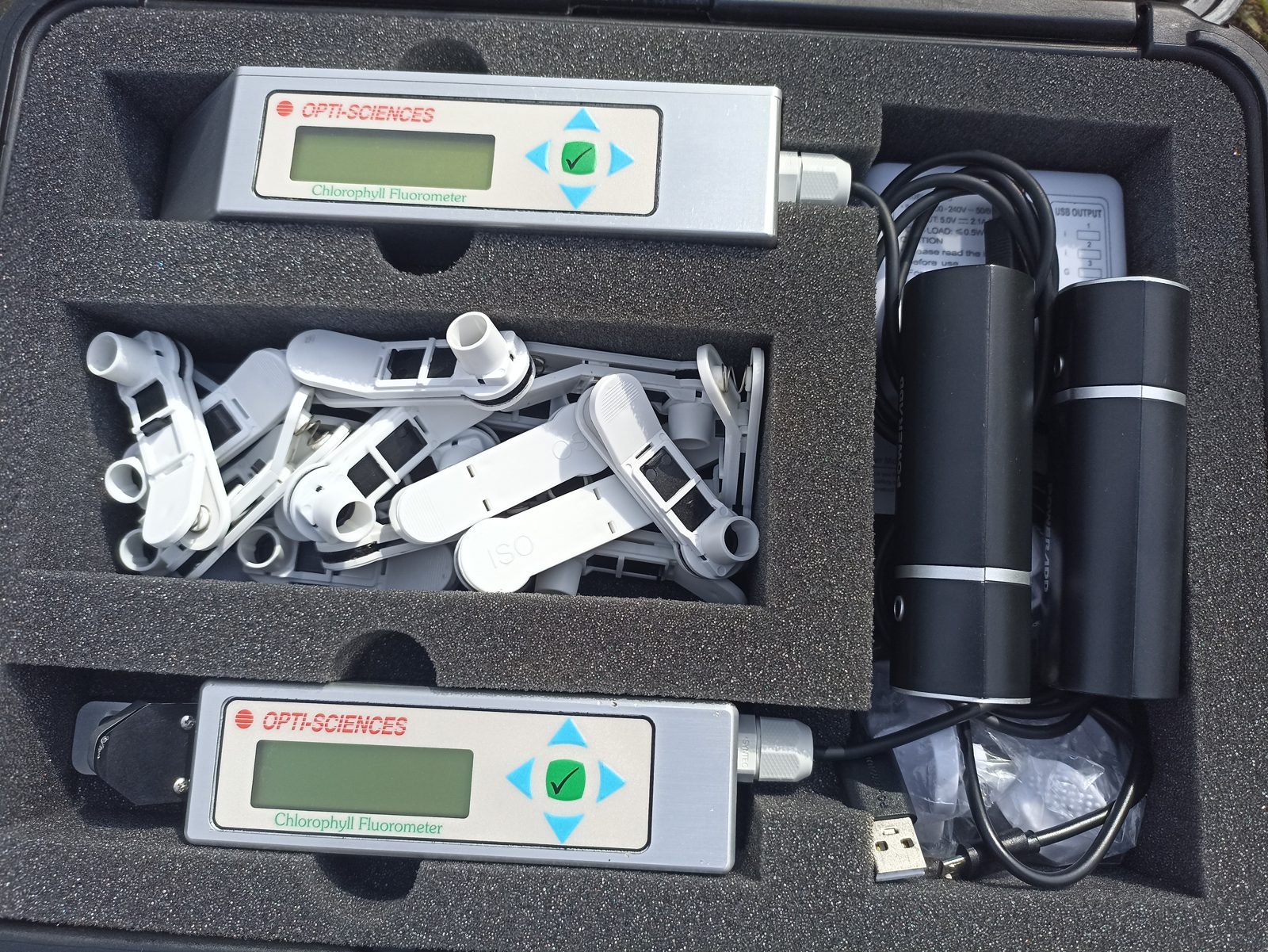
- leaf chlorophyll content is measured with a handheld meter, and clips are placed on the leaves for physiological measurements,
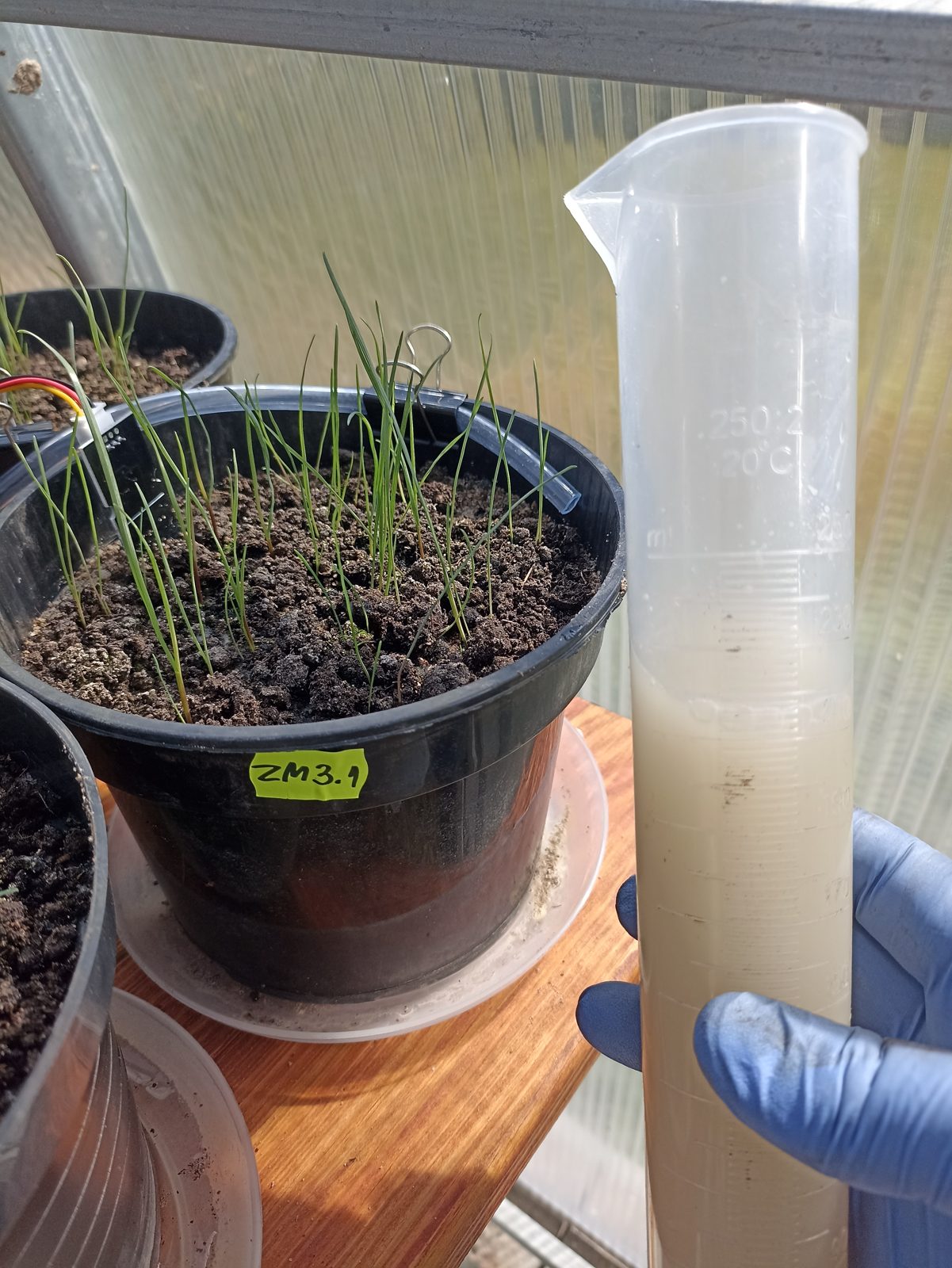
- solutions and suspensions are dosed into the pots in measured portions,
- the condition of the plants in each variant is photographed regularly throughout the season.
Operation and coordination
We run the facility day to day and coordinate the work of research teams. We drew up rules for using the site: how visits and scope of work are agreed, what experiments are allowed, health and safety rules, what to do in case of failure and who is responsible on each side. It sounds formal, but this is what separates a research facility from a garden: everyone knows who does what and when, so the results can be defended later.
Who uses it
The Institute of Fluid-Flow Machinery of the Polish Academy of Sciences uses the facility under a cooperation agreement. The institute carries out agronomic research here in Interreg Baltic Sea Region projects, including CiNURGi. Results from the 2025 season, on fertilisers made from waste-based pellets with effective microorganisms, became the basis of a scientific manuscript.
We also run greenhouse trials on commission, testing either the product alone or the product together with its production process.
What it shows
We close the full loop: we develop a technology, build the equipment, make the product, test it on plants and return to the design with conclusions. Research partners get a ready, operated facility. Industrial clients can test their product in a controlled growth trial.
Trials with fertilisers from waste are part of our circular economy work. We are a member of the Circular Economy and Recycling Cluster.
Photos