Transport cases for research equipment – a flight case for a radar antenna in marine conditions
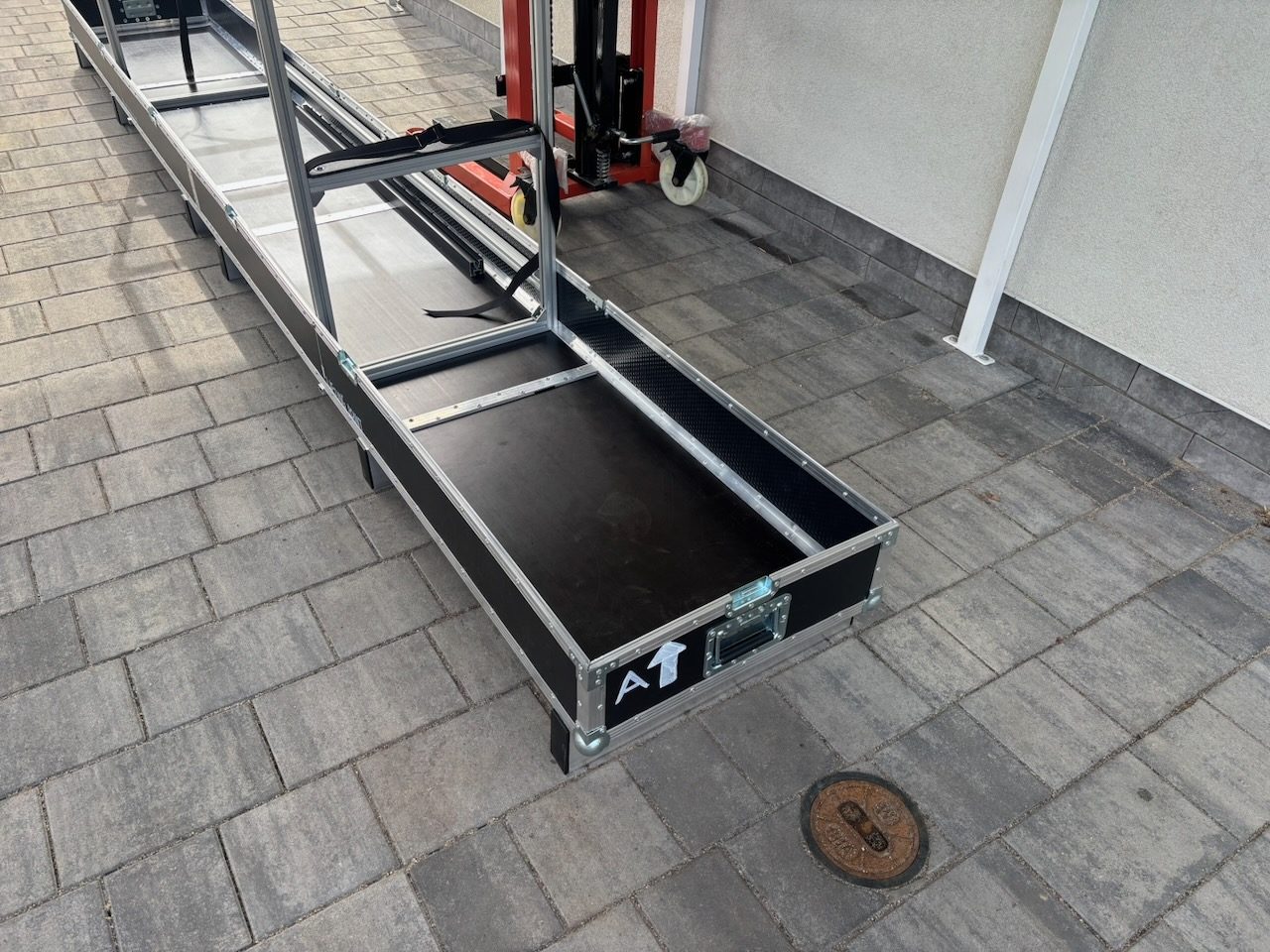
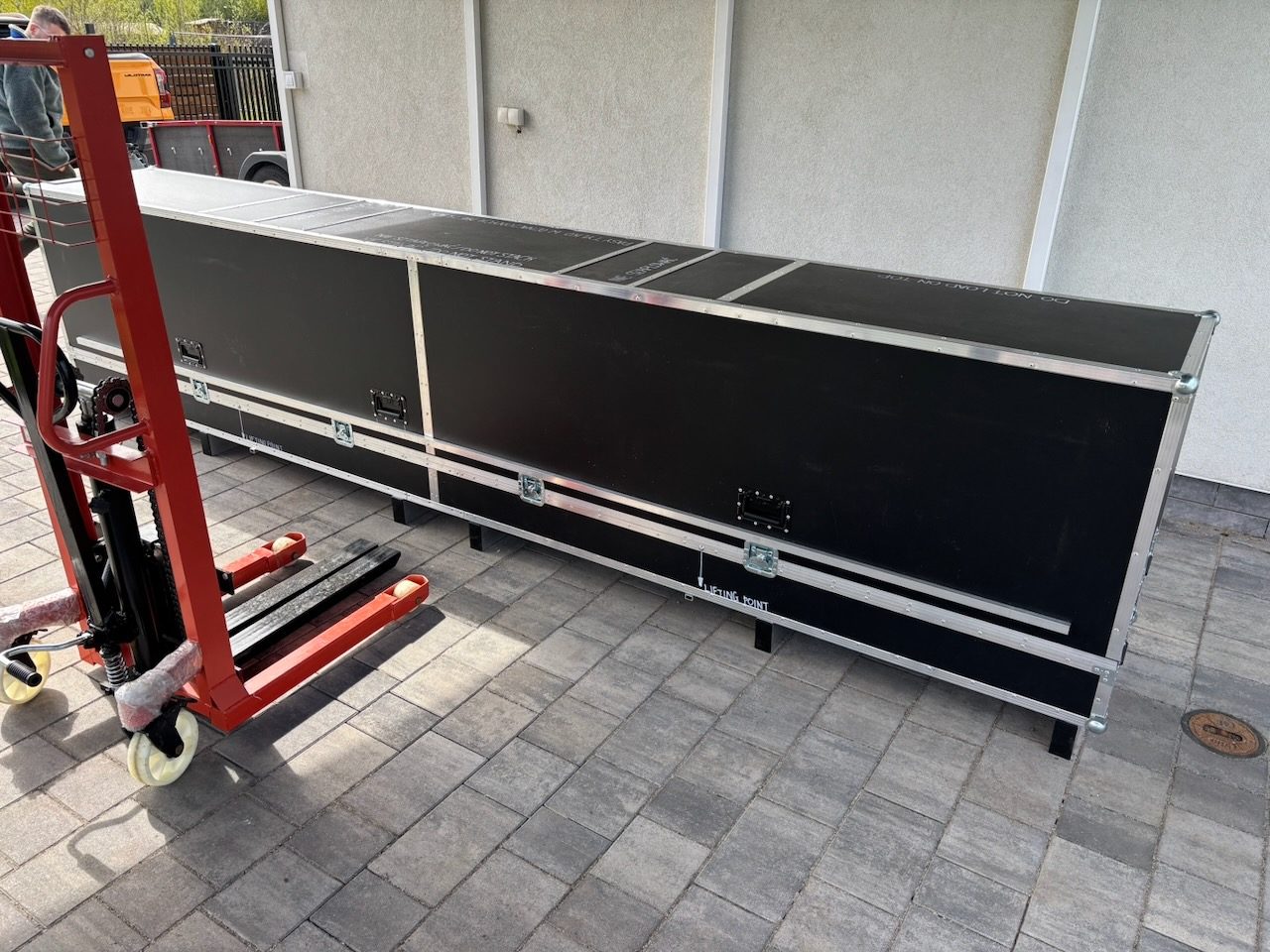
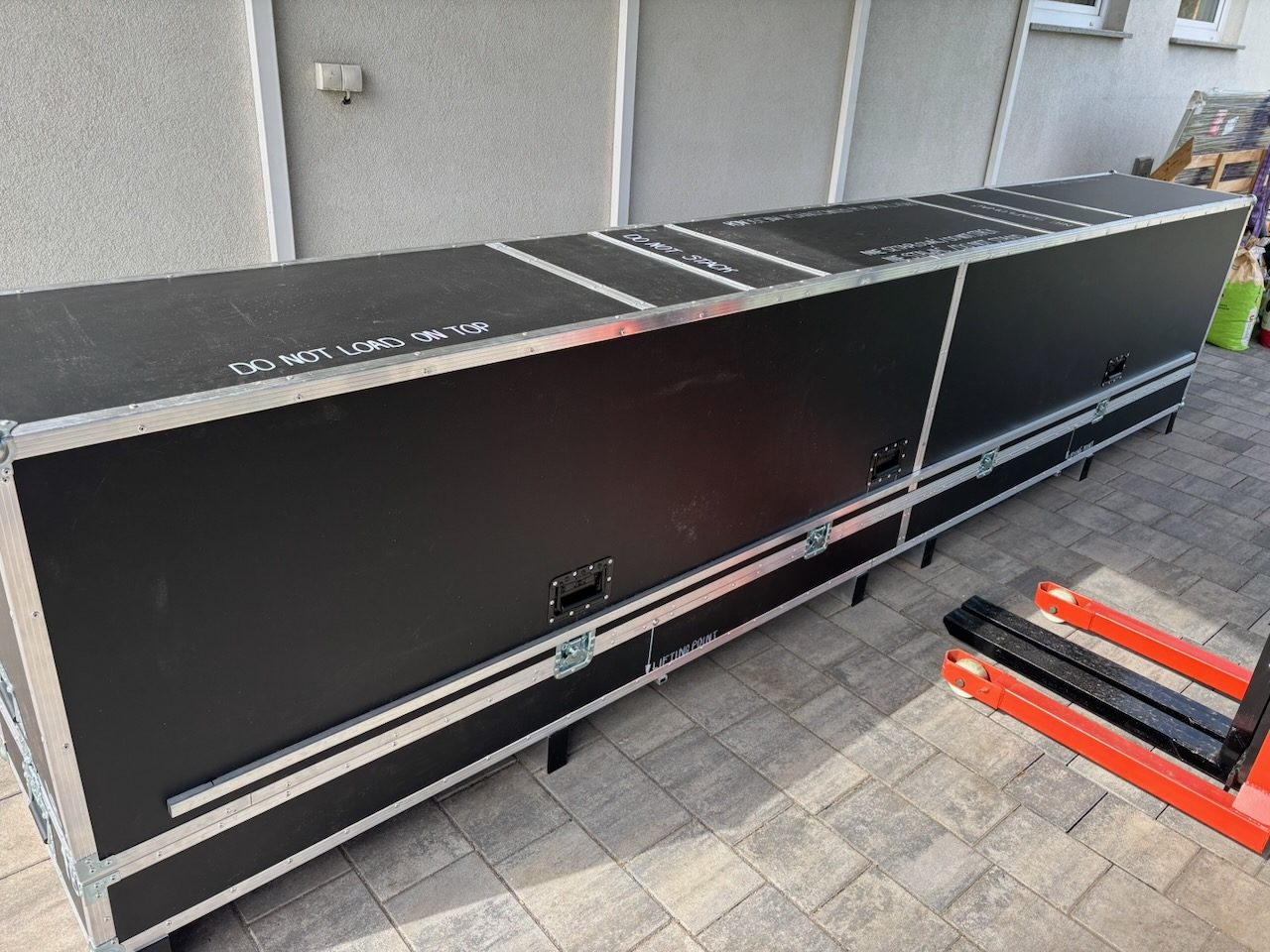
Research equipment is often large, heavy and delicate at the same time, and it has to survive transport by ship, crane and forklift. We design and build cases matched to a specific device. The photos show a case for moving a radar antenna in marine conditions.
Why a made-to-measure case
A radar antenna is more than four metres long, and its housing does not tolerate point loads or impacts. In marine conditions there is also moisture, salt, crane lifts onto a vessel and forklift handling on the quay. An off-the-shelf case cannot cope: either the antenna slides around inside or it is squeezed.
That is why we design the case around the specific device: its dimensions, its weight, the points it can rest on and how it will be handled.
What the case has
- A light flight-case construction: aluminium profiles and materials resistant to moisture and salt.
- An internal cage with adjustable supports: the antenna rests only where it may, without stress.
- Securing straps that hold the load with no play.
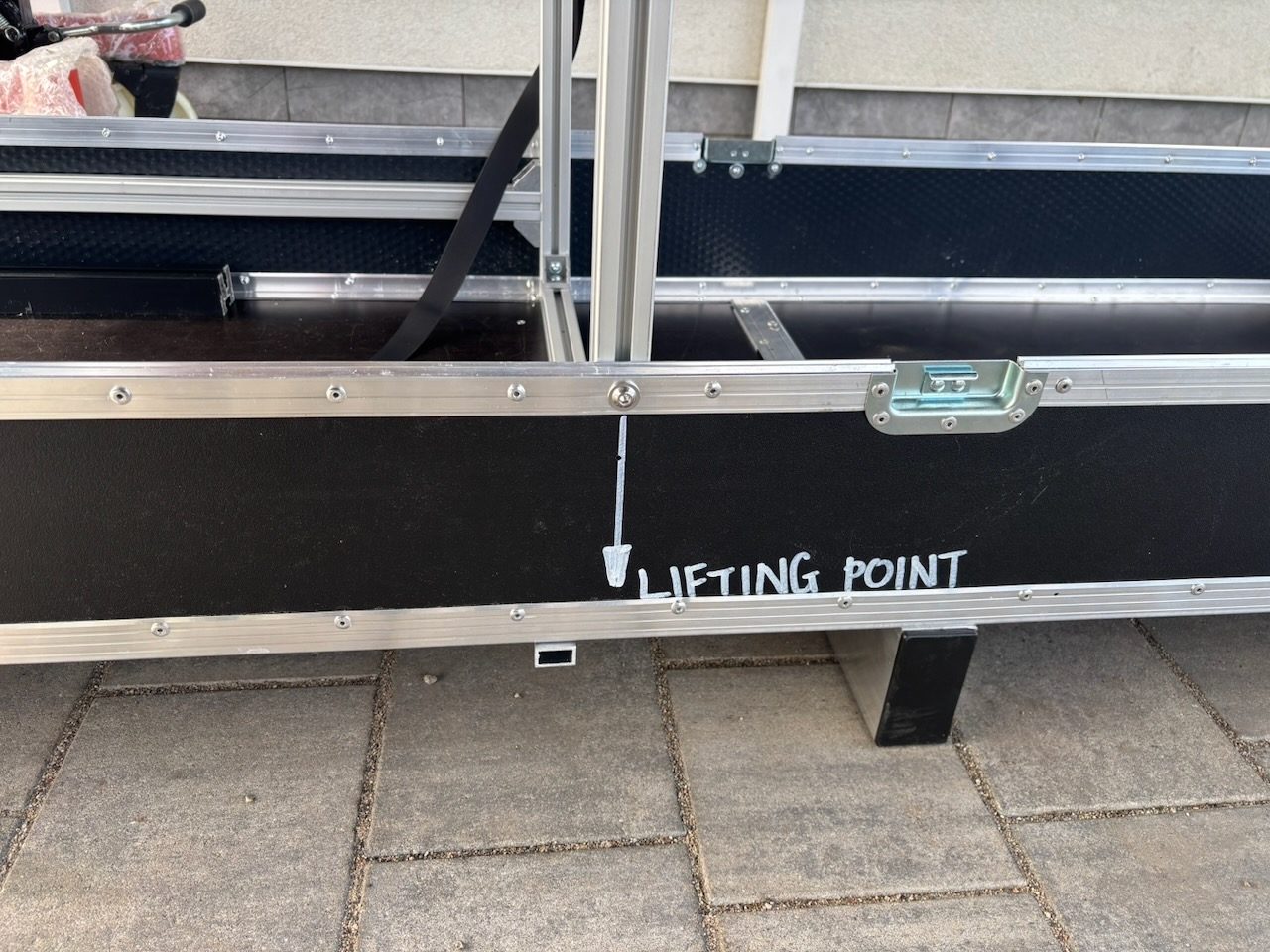
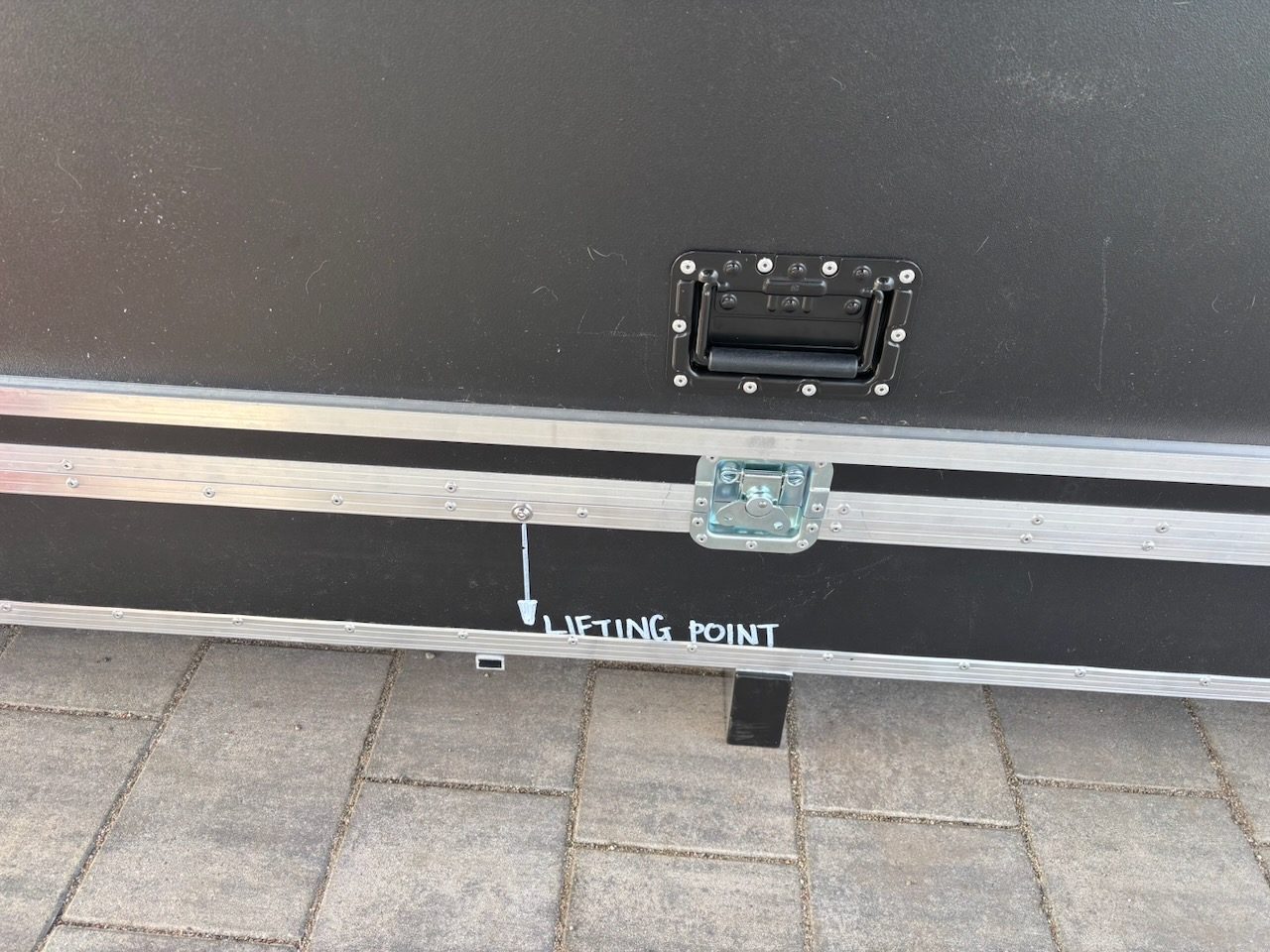
- Lifting points for a crane and skids for a forklift, marked on the case.
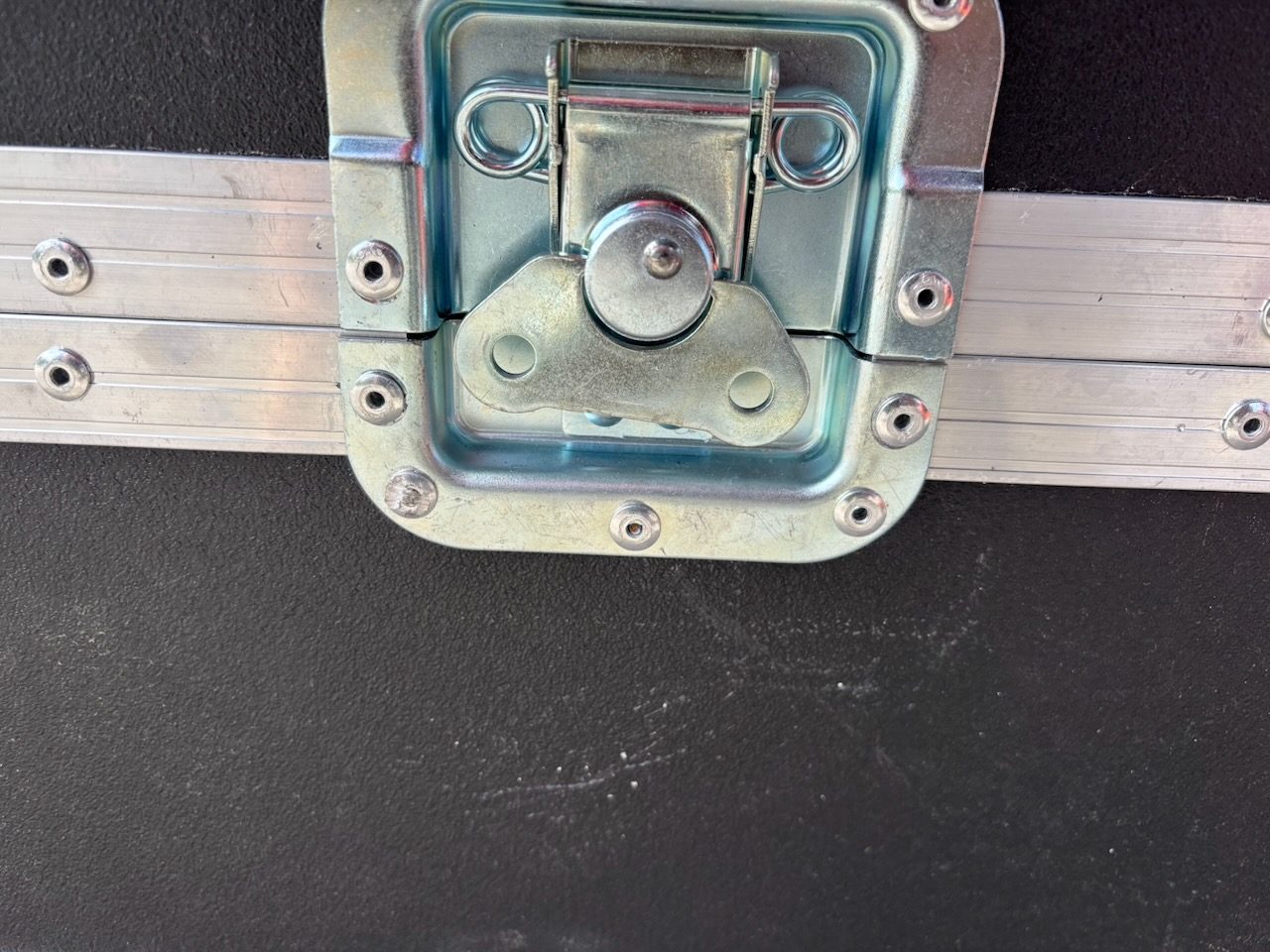
- A removable lid with butterfly latches and recessed handles.
- Handling markings, including orientation and a "do not load on top" warning.
How it is used
We wrote an operating manual for the case: preparation and opening, loading, closing, transport and storage. Two people lift off the lid after releasing the butterfly latches. Before loading, some cage profiles are removed, the device is slid in, the supports are set so that the profiles only stabilise the antenna, the straps are tightened and the cage is reassembled.
Not only radars
We take the same approach for other devices: we have built made-to-measure wooden crates for radar antennas and accessories, with supports, straps and a mounting plate, and we pack smaller measuring equipment in protective cases. If you have a device that has to reach a vessel, a platform or a laboratory safely, we will design a case for it.
What it shows
A transport case is equipment too: it has requirements, a design, manufacture and a manual. We build it so that research equipment arrives in the same condition in which it was packed.
Photos