Scientific publications
Results of our work appear in peer-reviewed scientific journals. Together with the Institute of Fluid-Flow Machinery of the Polish Academy of Sciences and partners from Poland, Norway and Sweden we have published six papers with Rendben as an affiliation, and three more are under review, including a review of radar-controlled obstruction lighting at offshore wind farms. We are also preparing papers on air traffic near Polish offshore wind farms in the Baltic and on radar data in navigation equipment.
A rapid decompression reactor
Woźniak A., Kuligowski K., Konkol I., Cenian A. A Reactor for Biomass Pretreatment by Rapid Compressed-Air Decompression (0–300 bar): Design, Safety, and Cycle Energetics. Energies 2026, 19(20), 4973. https://doi.org/10.3390/en19204973
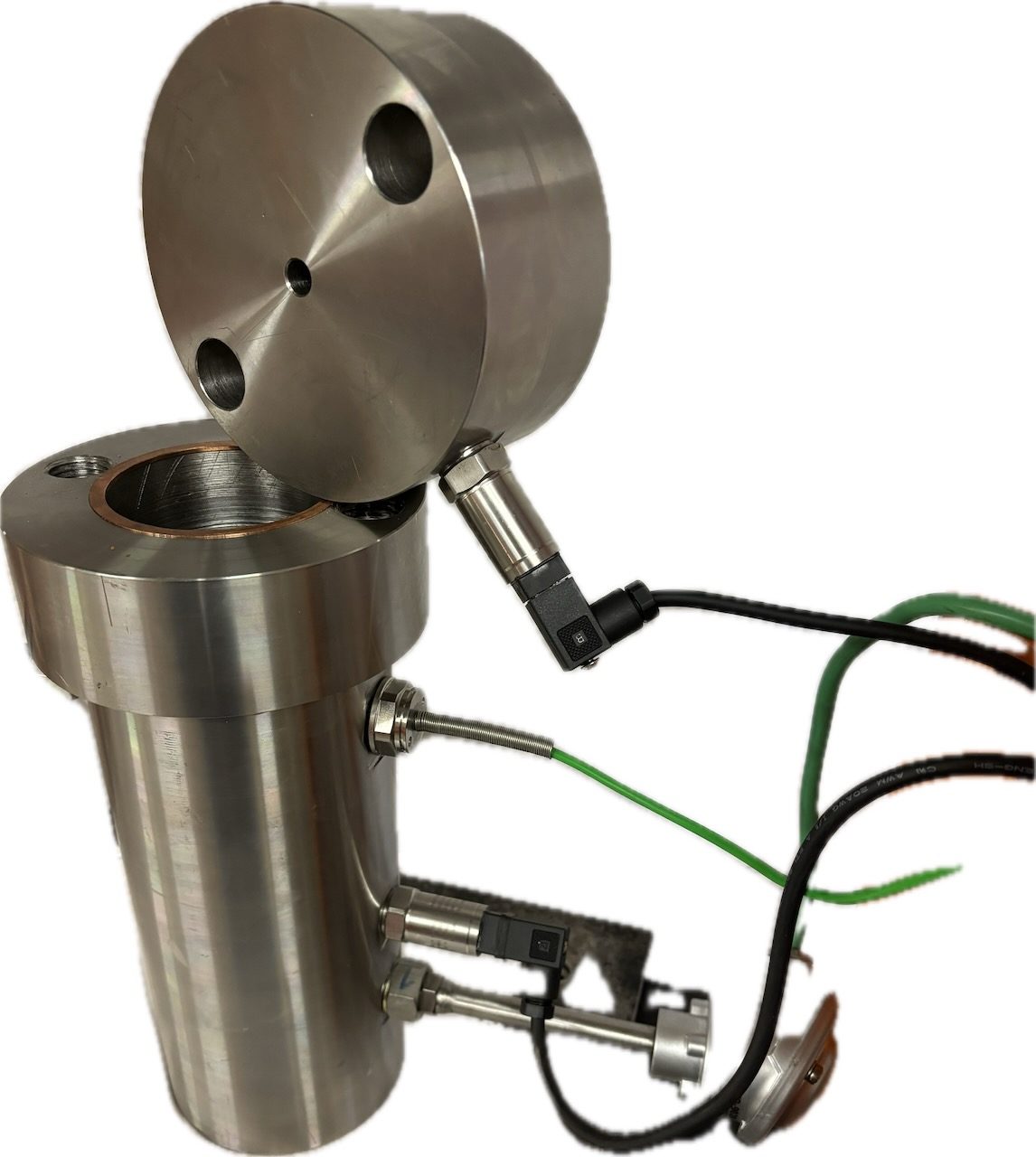
Rapid decompression breaks up the structure of biomass by a sudden pressure drop alone, without chemicals. Existing gas-based designs work below 60 bar and release the gas through valves. The paper describes our laboratory reactor, in which compressed air at up to 300 bar escapes through the full bore of the chamber: the lid, held down by a press, lifts as soon as the clamping force is released. It presents the strength calculations according to design codes, a pressure test and measurements of the decompression at millisecond resolution. It also works out the energy balance of the cycle and states plainly that at laboratory scale compression uses more energy than the extra methane returns, and what would have to change for the balance to turn positive at a larger scale. We built the reactor as part of our implementation doctorate and have filed a patent application for it.
Biomass pretreatment
Woźniak A., Kuligowski K., Świerczek L., Cenian A. Review of Lignocellulosic Biomass Pretreatment Using Physical, Thermal and Chemical Methods for Higher Yields in Bioethanol Production. Sustainability 2025, 17(1), 287. https://doi.org/10.3390/su17010287
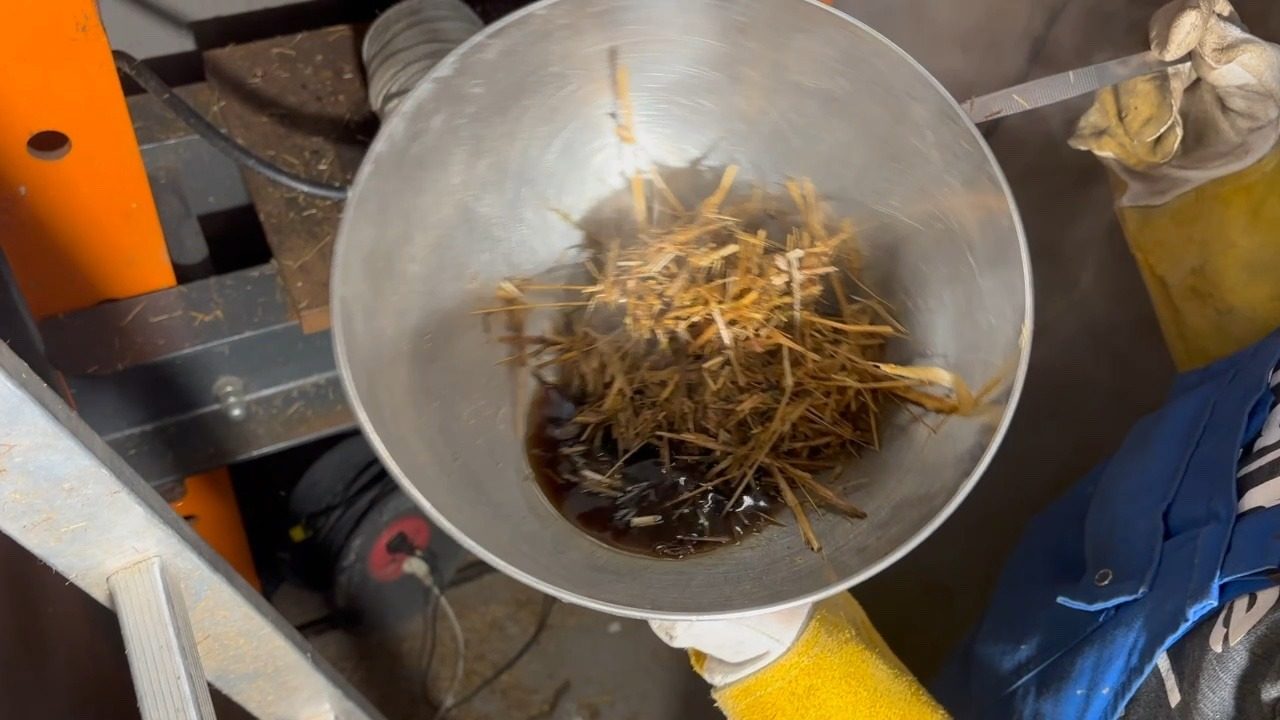
Straw, husks and forestry residues resist breakdown because lignin shields the cellulose. The review compares the main pretreatment methods, from steam explosion and pressure treatment to chemical methods, in terms of how far they open biomass to enzymes, and discusses the route from feedstock to biofuels and biorefineries. It is the basis of our implementation doctorate.
Fertilisers from kitchen waste
Kuligowski K., Konkol I., Świerczek L., Woźniak A., Cenian A. Conversion of Kitchen Waste into Sustainable Fertilizers: Comparative Effectiveness of Biological, Microbial, and Thermal Treatments in a Ryegrass Growth Trial. Applied Sciences 2025, 15(10), 5281. https://doi.org/10.3390/app15105281
Kitchen waste can become fertiliser, but it has to be processed first. The paper compares several biological, microbial and thermal treatments in a greenhouse pot trial with ryegrass. It shows that waste-based fertilisers act more slowly than mineral ones but for longer, and that treatment with effective microorganisms can replace energy-intensive sterilisation.
Nitrogen from tannery waste
Kuligowski K., Skrzypczak D., Mikula K., Chojnacka K., Bandrów P., Tylingo R., Mania S., Woźniak A., Cenian A. Leather Waste Hydrolysation, Carbonization, and Microbial Treatment for Nitrogen Recovery by Ryegrass Cultivation. Materials 2024, 17(23), 5741. https://doi.org/10.3390/ma17235741
Leather waste is rich in nitrogen, and burning it is a waste. The paper tests how to recover that nitrogen for plants through hydrolysis, carbonisation and microbial treatment, in a greenhouse trial with ryegrass. Waste amended with biochar, especially biochar enriched with microorganisms, performed best. Such fertilisers can replace mineral fertilisers and reduce the carbon footprint.
An earlier version of the work appeared as a preprint: Kuligowski K. et al. Recovery of Nitrogen from Tanned Leather Waste in Ryegrass Growth after Waste Hydrolyzation, Carbonization and Microbial Treatment. Preprints.org, 2024. https://doi.org/10.20944/preprints202410.1769.v1
Pelletised fertilisers with chitosan
Kuligowski K., Woźniak A., Strycharz J., Nawrot N. Agronomic Performance of Pelleted Multi-Ingredient Organic-Mineral Recycled Nutrient Fertilizers, Enhanced with Seafood-Waste-Containing Chitosan. Applied Sciences 2026, 16(21), 10478. https://doi.org/10.3390/app162110478
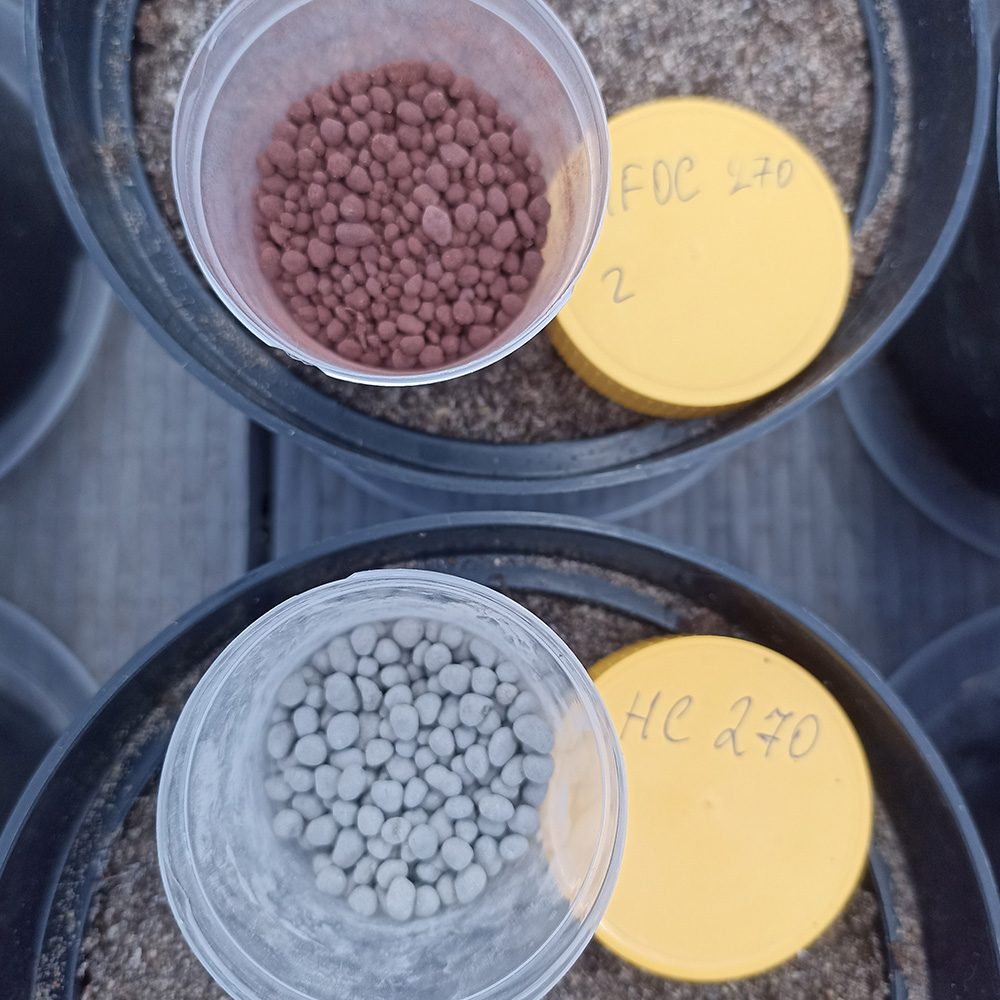
Fertiliser from waste can be made from several ingredients at once and formed into pellets that are easy to store and spread. The paper tests such pellets, including ones with chitosan from seafood waste, in a greenhouse pot trial with ryegrass, at several application rates and over successive cuts. It assesses yield and nitrogen uptake by the plants, and what chitosan adds to the fertiliser's performance. The fertiliser and its production method are the subject of our patent applications.
Yield versus nitrogen use
Kuligowski K., Woźniak A., Strycharz J., Nawrot N., Wojciechowska E., Cordeiro C.M., Sindhøj E., Pantelopoulos A. Yield-efficiency trade-offs for pelleted recycled nutrient fertilizers with a fermented microbial amendment: Integrating nitrogen use efficiency and agronomic effectiveness. Journal of Environmental Quality 2026, 55(6), e70324. https://doi.org/10.1002/jeq2.70324
Fertilisers from waste are usually judged by yield alone. This paper also looks at how well plants use the nitrogen they are given. In a pot trial lasting several months with a grass mixture, it compares two types of waste-based pellets, the same pellets with a fermented amendment containing effective microorganisms, and a commercial manure granulate. The waste-based fertilisers matched or exceeded the reference fertiliser, but the higher the rate, the less efficiently the plants used the nitrogen. The most balanced were pellets made of chromium-free leather shavings, ash and digested sewage sludge, without the amendment. The paper also shows that before such results are carried over to the field, all nutrients brought in with amendments have to be properly accounted for. The co-authors are researchers from Gdańsk University of Technology, the Norwegian institute NIBIO and the Swedish University of Agricultural Sciences (SLU).
Under review
- Aircraft detection lighting systems for offshore wind farms to support carbon neutrality: technologies, international regulations and the regulatory gap in Poland – a review of technologies and regulations for radar-controlled obstruction lighting at offshore wind farms, Academia Green Energy.
- Rapid Compressed-Air Decompression as a Pretreatment of Wheat Straw: Process Dynamics, Enzymatic Saccharification, and Methane Potential – results of straw treatment in our reactor, Academia Green Energy.
- Changes in the soil microbiome after fertilisation with waste-based fertilisers containing effective microorganisms, Applied Sciences.
Conference contributions
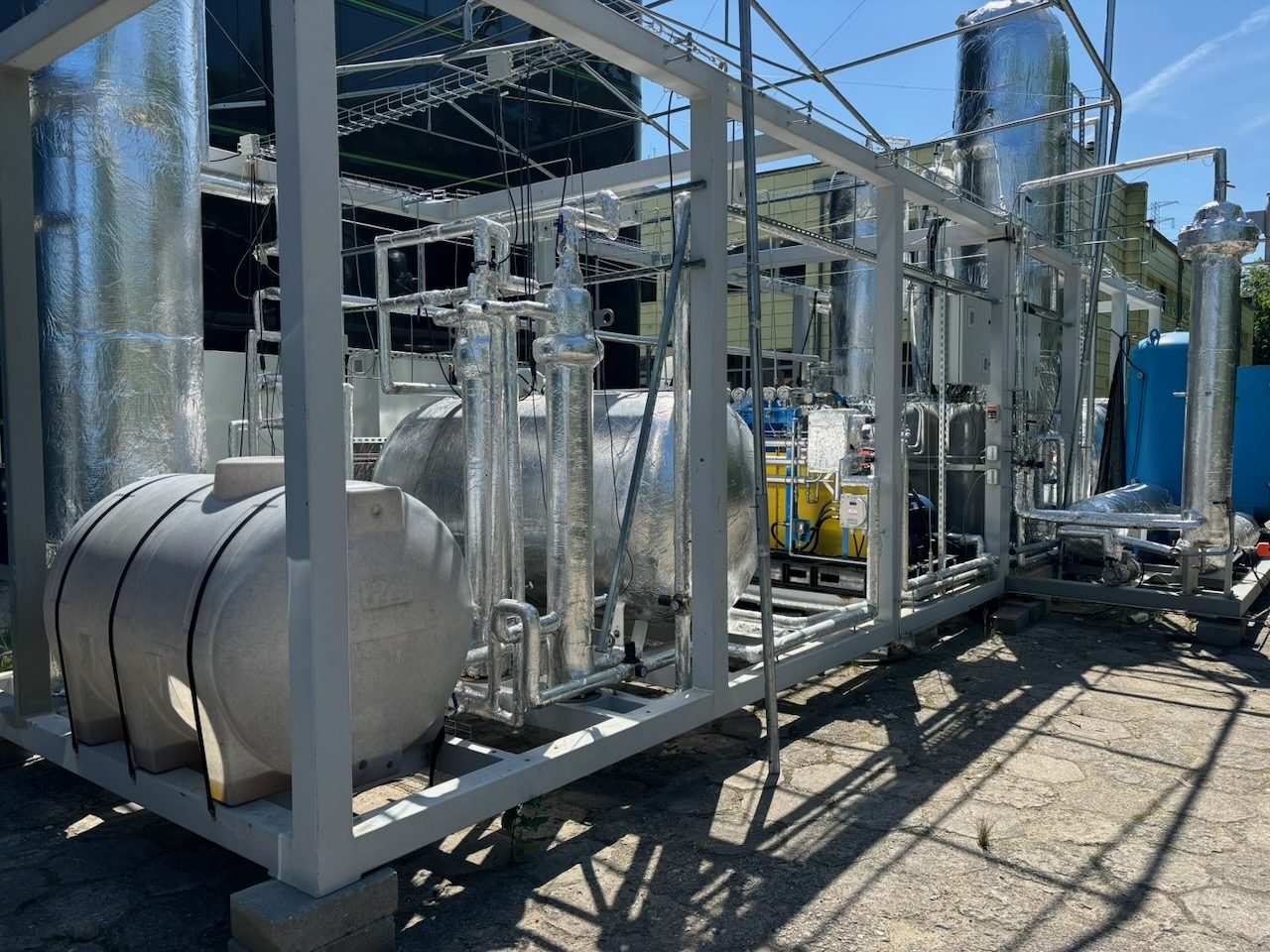
- Kuligowski K., Cenian A., Woźniak A. Production of pelletized Recycled Nutrient Fertilizers from various waste feedstocks on-site in a mobile installation and their agronomic validation via greenhouse studies. Poster, Bioeconomy 2030+: From Roadmap to Implementation, Puławy, Poland, 31 March 2026. The mobile fertiliser line from the CiNURGi project and its validation in greenhouse trials.
Work in progress
We write about what we do every day, and we do quite different things: from radar at offshore wind farms, through fertilisers from waste, to home energy. We rely on public sources and our own measurements; our clients' data stays with us.
Offshore wind
- Radar-controlled obstruction lighting. Offshore turbines are lit all night, even though aircraft rarely pass nearby. Aircraft Detection Lighting Systems (ADLS) detect approaching aircraft by radar and switch the lights on only when they are needed. A review of regulations and experience in Germany, the Netherlands, the United Kingdom and the United States, set against Polish regulations, is already under review.
- How often the lights would come on. Using public air traffic data (ADS-B), we check how often aircraft and helicopters fly low and close enough to Polish offshore wind farms in the Baltic at night for an ADLS to switch the lights on.
- Radar data in navigation equipment. Radars and surveillance systems report the tracks of detected objects in the ASTERIX standard, while many navigation devices accept only NMEA 0183 messages. We analyse what can be carried over from one standard to the other, what is lost on the way, and how to choose targets when the link is too slow.
More about our offshore wind work
Soil and fertilisers from waste
We study how soil bacteria change after fertilisation with waste-based pellets enriched with chitin from seafood waste, and compare this with the agronomic results of the same experiments. We are also comparing how much of the nutrients plants take up from 32 different recycled fertilisers in greenhouse trials.
Home energy: solar PV, storage and an electric car
On a working solar PV system with energy storage and an electric car charger we collect data for papers on home energy management: on an AI assistant that helps with decisions, and on charging the car from surplus energy. The work is part of the SBEES project, and we are planning a joint review paper with the project partners.
Why a company publishes
Results nobody has checked are only our opinion. Peer review is the cheapest way to check whether what we do holds up. Publications also show that we are a research partner, not just a contractor, which leads to invitations to consortia, and they underpin further work such as CiNURGi and the experiments in our research greenhouse. All works are also listed in the ORCID profile.